
Short Squeeze, Rate Cuts Priced In: Will Bitcoin Hit a New All-Time High by 2026?


💡Bit Weekly Insight
Macro Tailwinds, Price Breaks $90K. The U.S. Federal Reserve recently announced the conclusion of the quantitative tightening (QT) process. Market expectations for a rate-cutting cycle to begin in 2026 are heating up, releasing a positive signal for liquidity improvement. After a sharp unexpected drop earlier in December, the BTC price broke above the $90,000 threshold.
ETF Capital Inflow Resumes. Bitcoin-related exchange-traded products have seen a net inflow turnaround, attracting over $400 million in capital in a single week. Funds from giants like Grayscale, Fidelity, and BlackRock made the list, showing signs of long-term capital entering at lower price levels.
Institutions Remain Optimistic. Institutions such as JPMorgan Chase and Grayscale remain optimistic about the market outlook, maintaining that Bitcoin's medium-to-long-term upward trend is unchanged. Some even predict that BTC is poised to hit a new historical high in 2026.
Regulatory Breakthrough. The UK court formally recognized crypto assets as "personal property" through legislation, sparking widespread discussion in the market about a regulatory breakthrough.
Confidence Gradually Building. Amid expectations of a macro recovery and the rebuilding of industry confidence, market sentiment experienced extremes this week. However, the bull belief remains solid in the long-term tug-of-war between bulls and bears.
I. Market Overview
BTC Price
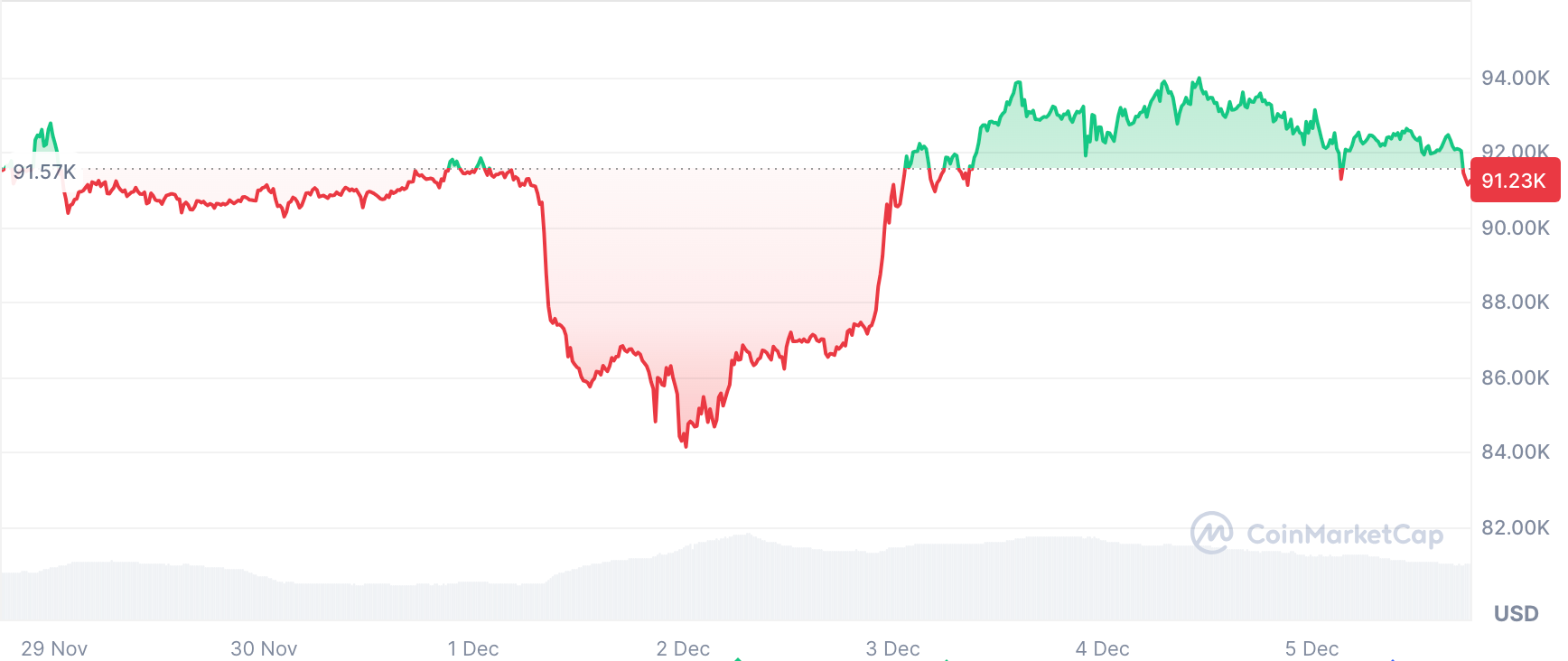
Bitcoin's price was highly volatile this week. The hawkish stance of the Bank of Japan's governor was the main catalyst for the sharp drop at the beginning of the week, with the Bitcoin price quickly dipping around December 1st. On December 3rd, influenced by the ADP non-farm data, Bitcoin rebounded above $90,000.
Network Hashrate and Difficulty
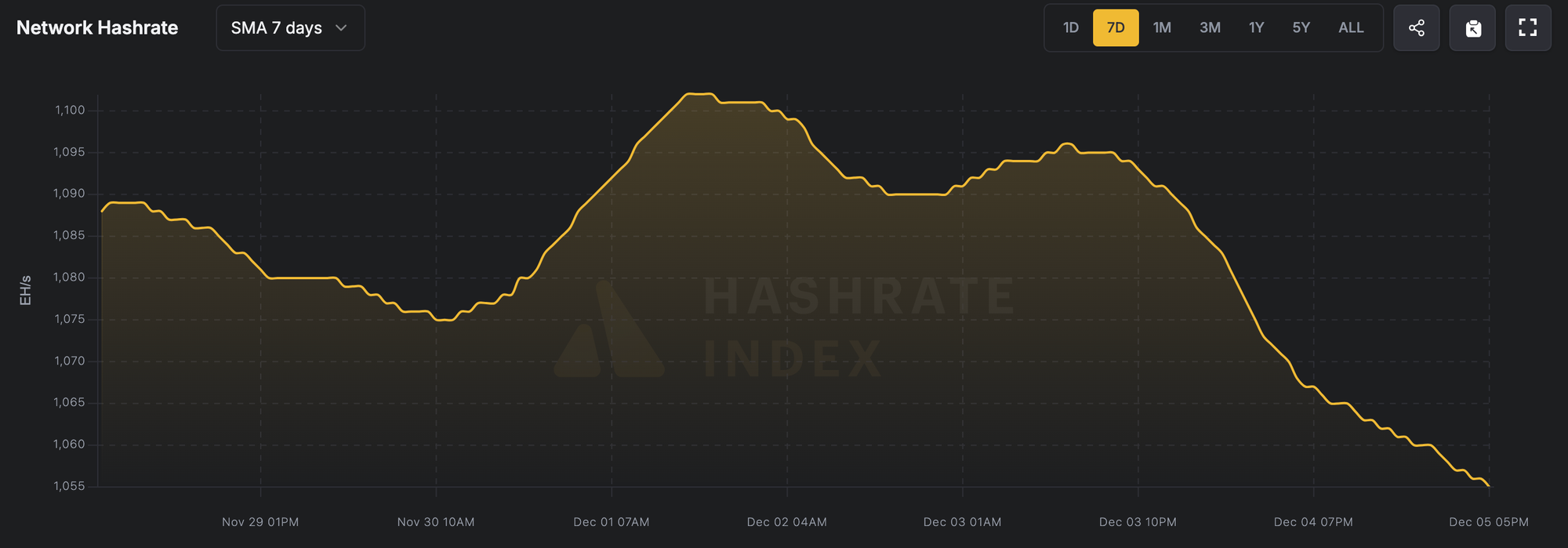
The network hashrate rose and then corrected this week, generally maintaining around 1.04 ZH/s, slightly below the historical peak in October. Mining difficulty is expected to drop again on December 11th, with a projected reduction of 3.11%. This round of difficulty adjustment temporarily eases the pressure from the previous surge in hashrate. Some miners opted to power down due to the price drop and reduced profitability, causing the block interval to return to 10 minutes and 19 seconds.
Transaction Fees
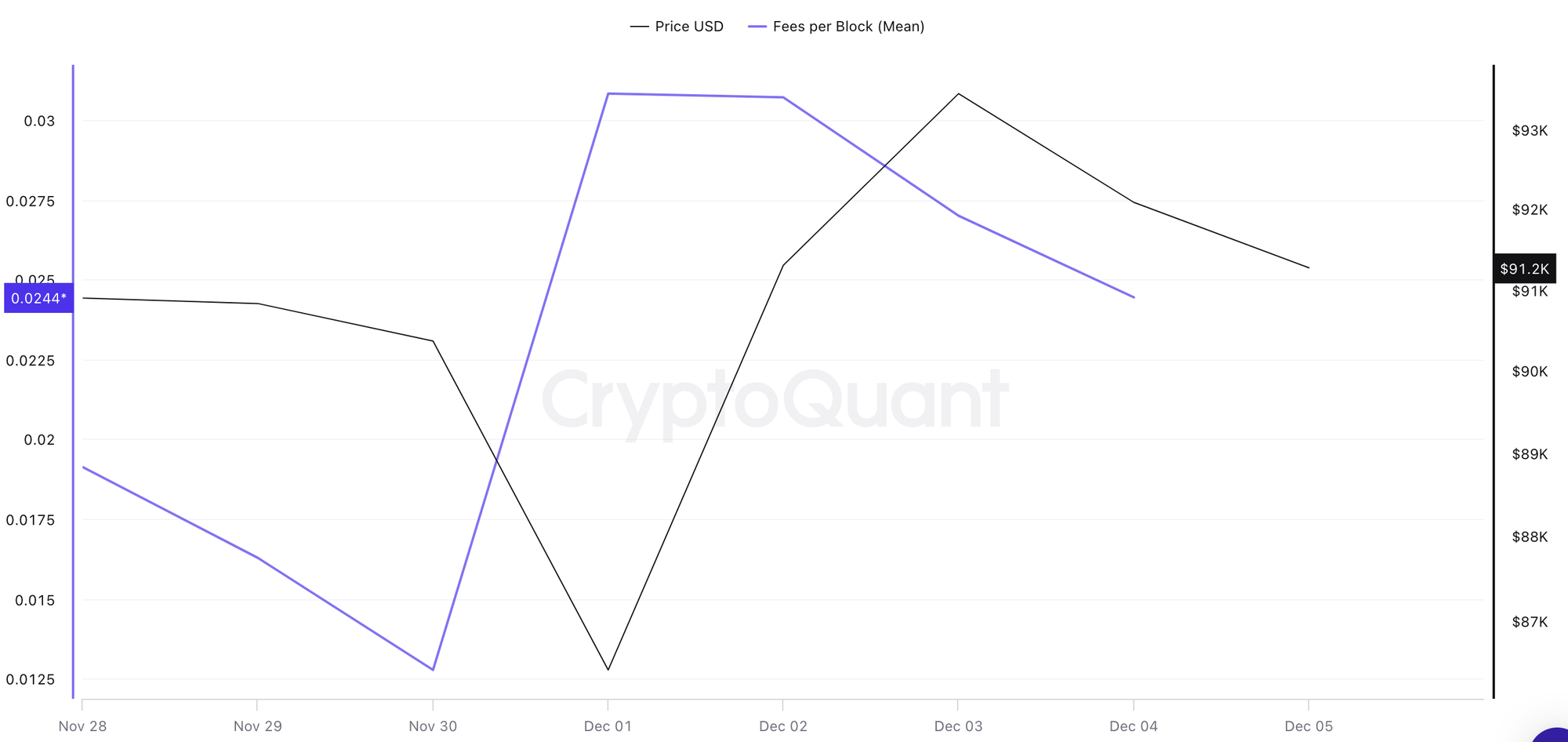
Transaction fees per block rose from 0.013 BTC to over 0.03 BTC this week, an increase of about 130%. Transaction fees account for about 0.07% of the block reward, maintaining a healthy level.
🎯 Bit View
Although macro liquidity expectations are improving, the sharp swings are a fresh reminder that Bitcoin's highly volatile nature is unchanged. The price has not shown a clear rebound trend. Combined with the impact of winter power constraints, some miners were forced offline, causing the total network hashrate to continue to fall. Low transaction fees suggest low transaction costs and fast confirmation times, which helps improve Bitcoin's utility as a payment network. However, from the miners' perspective, low fee income means the block reward is more dependent on price.
II. Market Analysis
Hashprice
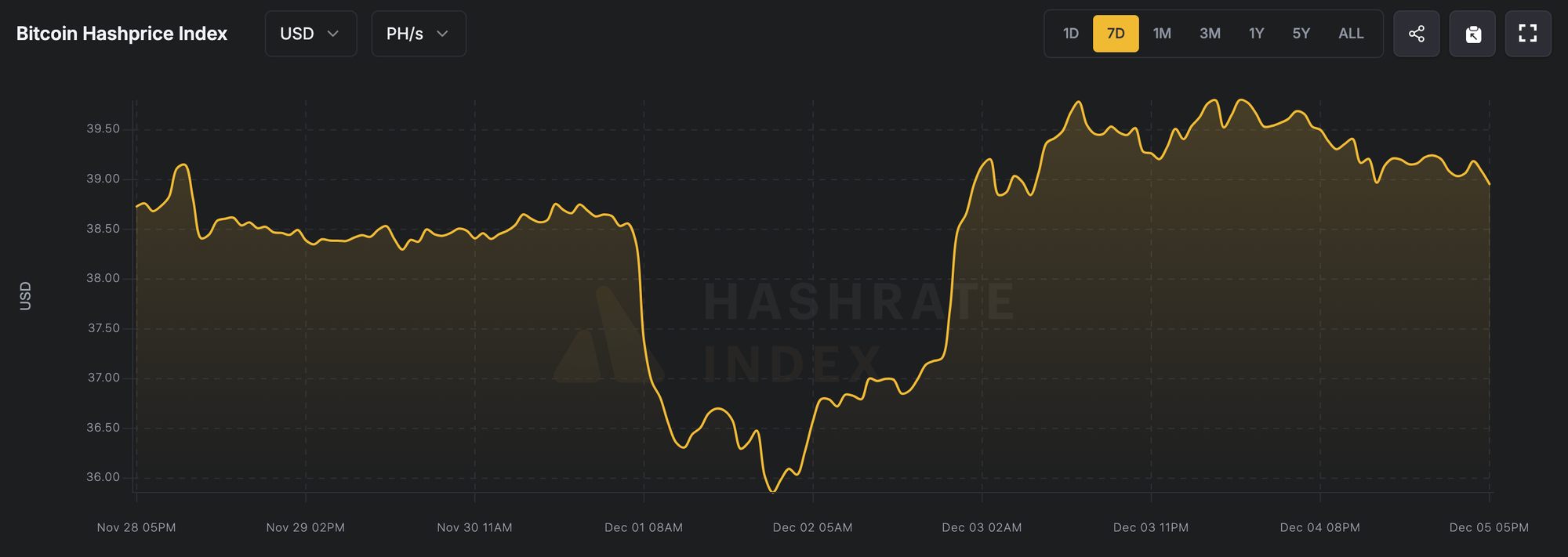
With the price and difficulty acting inversely, miners' profitability per unit of hashrate has recently remained low. This week, the Hashprice rose from $36/PH/s/day to a maximum of $39.8/PH/s/day, partially improving miners' unit hashrate profitability.
Cloud Mining Market
The cloud mining market sentiment has rebounded with the price increase. Taking the 180-day product as an example, if an investor purchases a 180-day cycle cloud mining product on the Bit platform, the mining price is $0.0389/T/day, which is noticeably lower than the latest Hashprice. This makes the cloud mining product more competitive. Bit launched short-cycle products and hashrate discount packages in December, offering users a better mining yield ratio than self-purchasing machines.
Industry Trends
Three major new trends are emerging in the Bitcoin mining industry: new machine iteration, AI/HPC expansion, and energy cooperation. First, many mining farms are intensively upgrading their machines in the second half of the year to remain competitive in an environment of rising difficulty. Second, the transformation from "mining farm" to "compute center" has become popular. Over 70% of top mining enterprises have ventured into AI/HPC compute services. For example, Marathon acquired a majority stake in Exaion, a subsidiary of the French utility company EDF, for$168 million, entering the enterprise private cloud and HPC fields. Riot has slowed the construction of its Corsicana super-mine in Texas, converting up to 600 MW of its capacity to an AI data center, and accordingly lowered its year-end hashrate target from 46.7 EH/sto 38.4 EH/s. Third, the integration of the mining and energy industries is accelerating. Mining enterprises are transitioning from being "large consumers" to partners of power infrastructure, achieving a win-win situation through long-term power contracts and joint investment.
🎯Bit View
Whenever miners face widespread losses, it is often a signal of the bottom region of the Bitcoin cycle. The depressed Hashprice is triggering a new round of industry consolidation. Weaker, higher-cost players are forced out, while cash-rich, technologically advanced players are accumulating strength, awaiting the next market turning point. Simultaneously, technological innovation, cross-industry cooperation, and diversified operations are becoming the new normal.
III. News and Events
Public Miner Transformation Accelerates
CleanSpark (CLSK) reached an agreement with the Tennessee Valley Authority (TVA) in the U.S., securing an additional 125 MWof power capacity, increasing its total contracted power to 1.4 GW, laying the foundation for future AI/HPC data center construction. In terms of performance, CleanSpark mined 587 bitcoins in November, a new monthly high, but also sold 565 of them to lock in profit at an average price of about $91,979.
Bitcoin ETF Capital Rebound
Bitcoin-related exchange-traded products saw a significant reversal after continuous net outflows in November. The total net inflow for Bitcoin investment products tracked this week exceeded $400 million. Market participants believe that if the macro environment remains favorable and no new negative events occur before the end of the year, capital flow through the ETF channel is expected to continue, providing support for Bitcoin.
UK Recognizes Crypto Assets as Property
On December 4th, the UK's Digital Assets Act received Royal Assent and became law. England, Wales, and Northern Ireland are now among the first jurisdictions globally to confirm through legislation that digital assets can be recognized as personal property. The law explicitly states that crypto tokens, NFTs, and other digital assets can be legally owned, inherited, and recovered as property in cases of theft or fraud, granting millions of crypto asset holders stronger legal protection and reducing dispute uncertainty.
🎯Bit View
The strategic pivot by veteran mining companies reflects the industry's flexibility in adapting to the environment and accelerating its expansion beyond traditional boundaries. Capital flow is often a barometer of market sentiment. The rapid shift in ETF capital from outflow to inflow after the crash reflects institutional investors re-positioning at lower levels. The UK's "official naming" of crypto assets is a watershed moment, not only granting legal personhood to digital assets but also signaling a favorable regulatory environment to the market.

