
The $100,000 Freeze: A Dark Hour for Miners

Weekly Bit Insight
- [Market Cap Evaporation] A cold snap bloodbath! In just four weeks, the total market capitalization of 15 listed mining companies plunged by $20 billion, a drop of up to 25%, giving back most of their year-to-date gains.
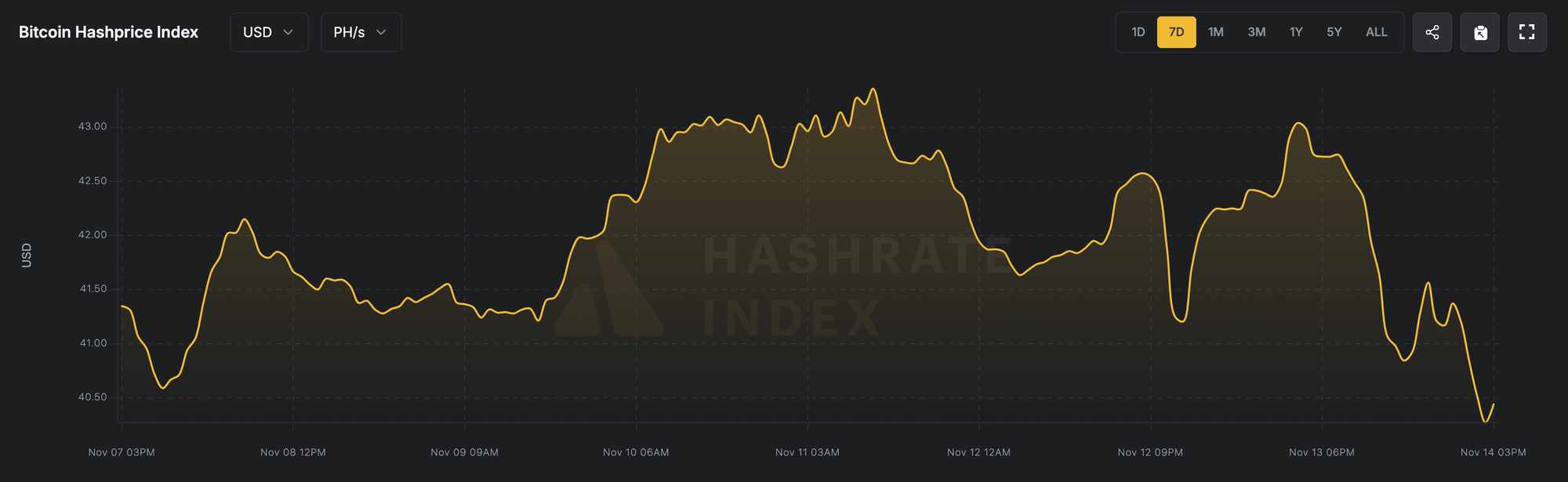
- [Profitability Red Line] Hashprice nears $40: This week, the Hashprice fell below $43/PH/s/day, approaching the break-even line for most miners.
- [Industry Upheaval] Bitfarms officially announces "Exit" from mining: Mainstream miner Bitfarms became the first large publicly-listed mining company to announce a complete withdrawal from Bitcoin mining in the future, pivoting all resources to AI high-performance computing (HPC).
- [Ten Billion Dollar Orders] The Great "Mine-to-Compute" Pivot: Cipher Mining and Iris Energy secured long-term AI cloud computing contracts totaling over $10 billion, underscoring miners' resolve to re-evaluate their power infrastructure as "data center" assets.
- [Capital Hedging] Wall Street's Silent Buying: Despite widespread market sell-offs, top institutions like Fidelity and Jane Street bucked the trend by increasing their stakes in mining stocks such as Riot and Cipher.
- [Counter-Trend Profitability] BitFuFu Q3 Exceeds Expectations: Mining machine manufacturer/miner BitFuFu reported Q3 earnings per share (EPS) of $0.07, significantly beating the market expectation of $0.02. Achieving profitability against the trend of widespread industry losses demonstrates the resilience of its business model.
I. Market Overview
BTC Price Movement
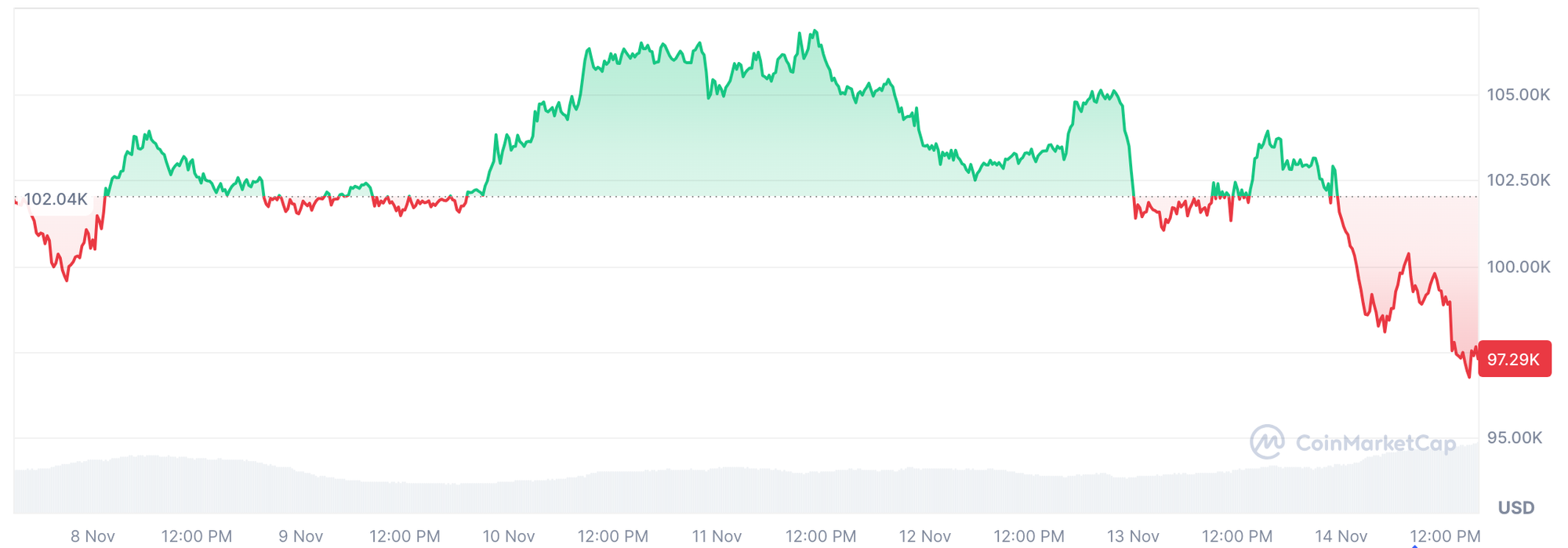
As of November 14th, the Bitcoin price has corrected from its previous high and briefly fell below the $100,000 mark this week. This price correction intensified market panic and directly transmitted to the mining sector.
Network Hashrate and Difficulty
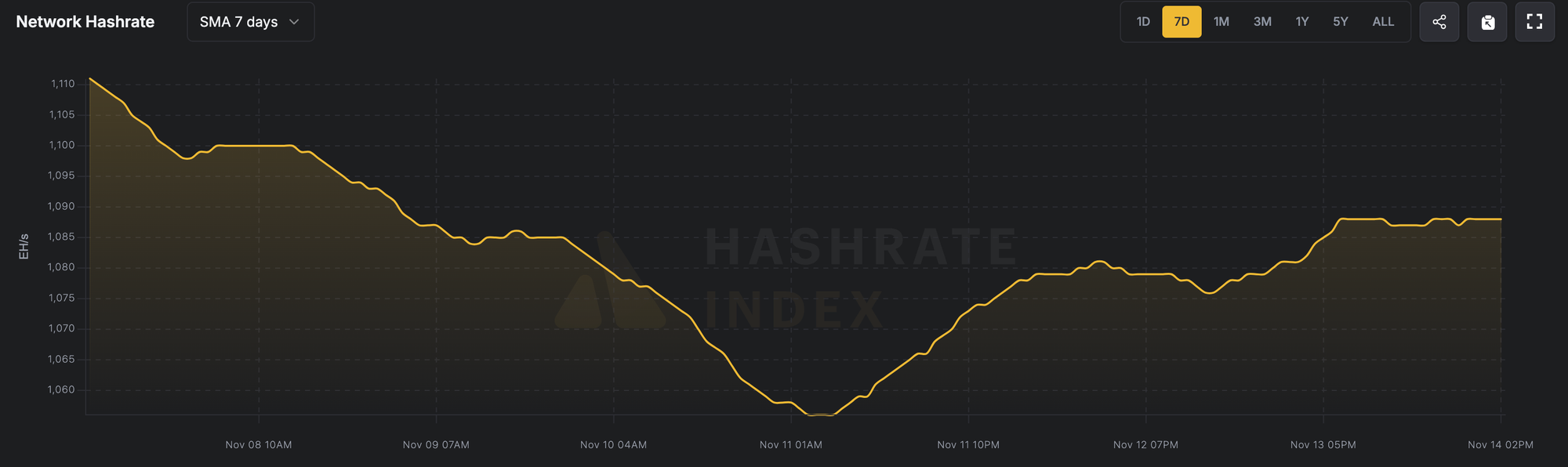
In terms of network hashrate, the 7-day average hashrate for the entire network stabilized around 1.06 ZH/s, indicating a significant slowdown in hashrate expansion amid high competition and low coin prices. For difficulty, a new difficulty adjustment was completed on November 13th, with the difficulty value decreasing by approximately 2.37% to 152.27 T. This offers a slight breathing room for miners facing immense profitability pressure.
Transaction Fees
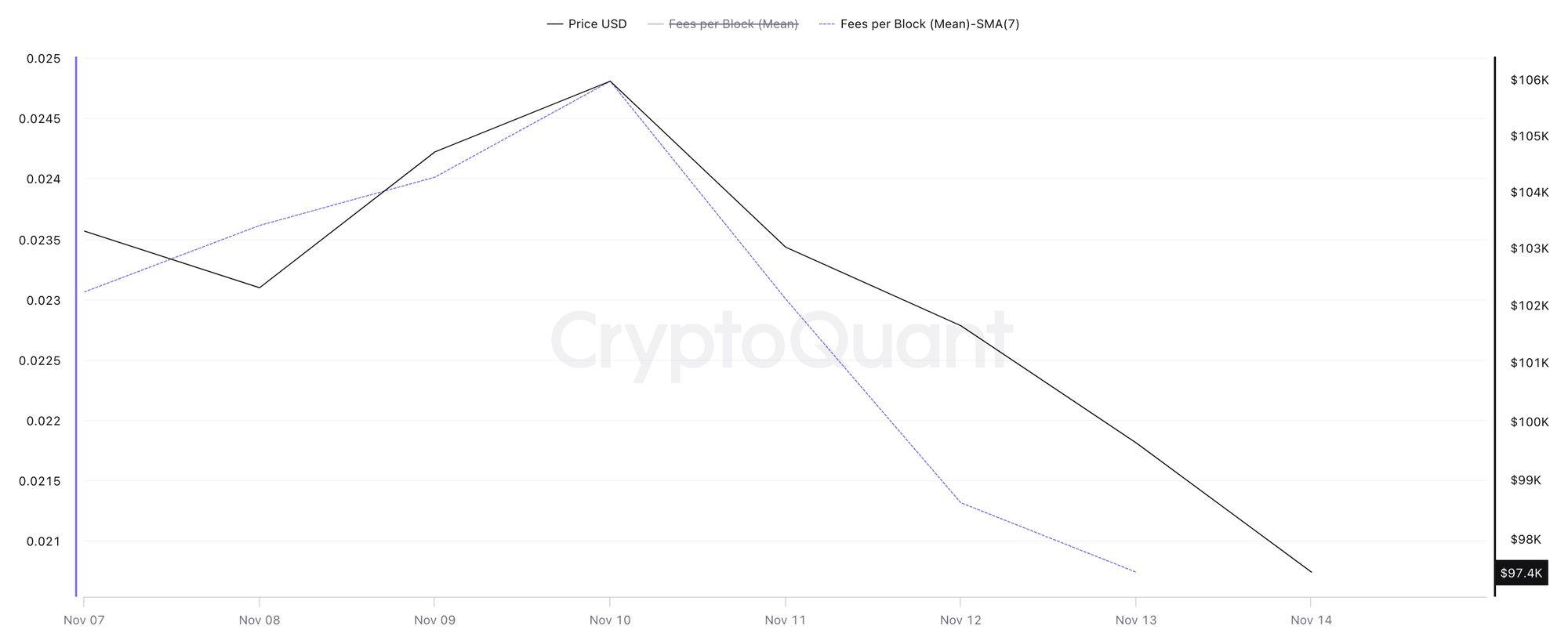
Over the past week, miners received a total block reward of approximately 3,101 BTC, valued at about $320 million at the time. However, transaction fees contributed only about 0.7% of this amount, or about $2.1 million. This means miners' revenue is almost entirely dependent on the new block subsidy, with income from transaction activity being extremely thin.
This low on-chain demand was highlighted by a noticeable anomalous transaction this week: on November 11th, a Bitcoin transfer valued at only $10 paid a transaction fee of nearly 1 BTC. This transaction was included in block 923023 by Marathon's proprietary mining pool, pushing the block's total reward to 4.154 BTC, far exceeding the normal 3.125 BTC block subsidy plus fees, making it one of the largest fee blunders in recent years.
II. Market Analysis
Hashprice
As the profitability indicator for the hashrate market, the Hashprice has been on a downtrend since hitting a high of about $62/PH/s/day in July. This week, it approached the $40 mark twice, hovering in a cyclical low range. The decline in Hashprice has reached the break-even point for many small and medium-sized miners.
Cloud Mining Market
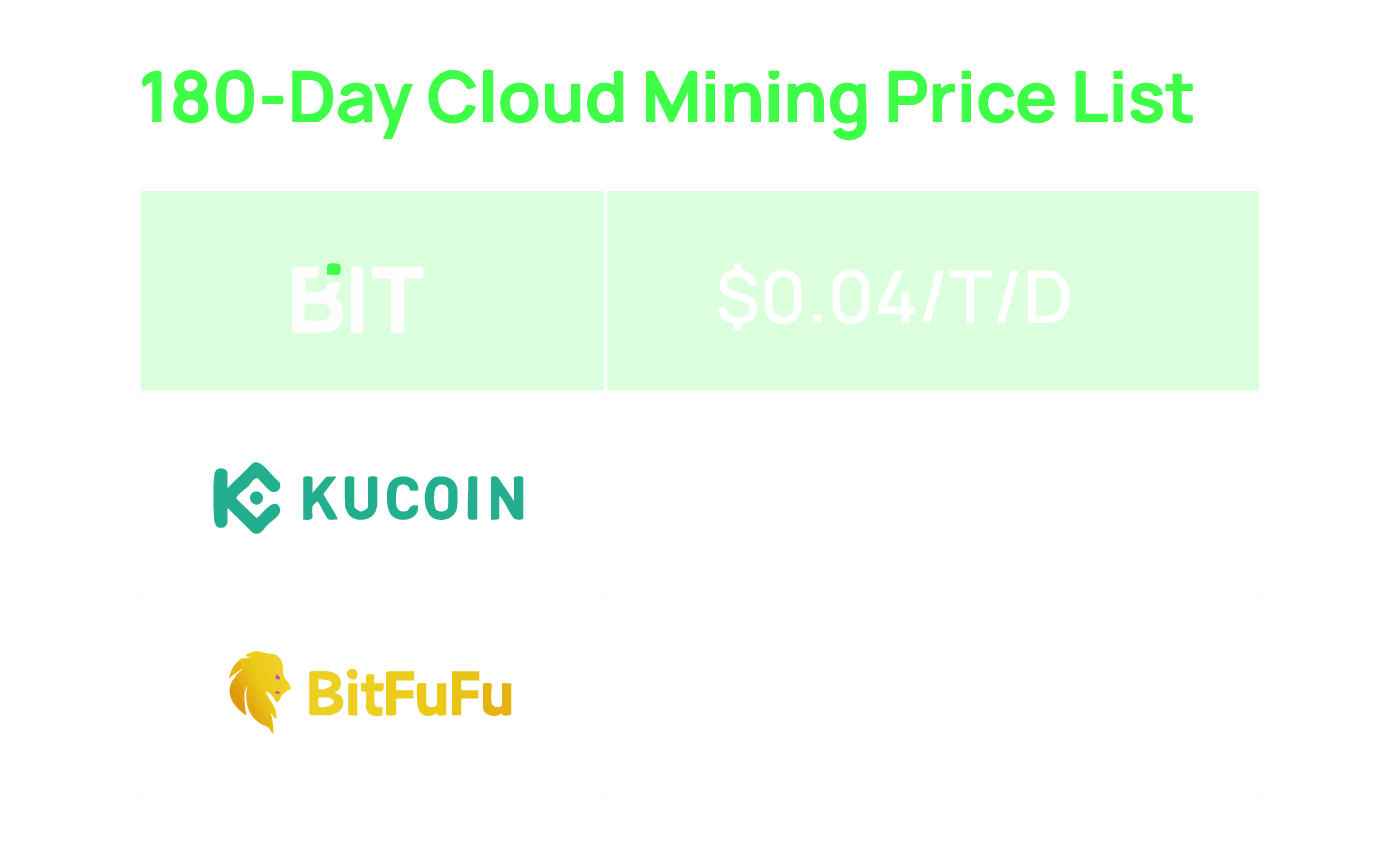
This week, the BTC price falling below the $100,000 mark undoubtedly intensified pressure on the cloud mining market. The median nominal quote for 180-day cloud mining products remains at about $0.0465/T/day. For a 180-day product, if an investor purchases a cloud mining product with a 180-day cycle on the Bit platform, the mining price is $0.04/T/day. Additionally, Bit launched a time-limited special offer product with a 30-day cycle.
Industry Trends
Capital Activity: Institutional Silent Buying vs. Tether Selling
It is noteworthy that institutional investors are capitalizing on the correction period to increase their stakes in mining stocks. According to the latest 13G filings, Fidelity (FMR LLC) recently acquired an 8% stake in Riot Platforms, while Jane Street increased its holdings in miners like Terawulf, Cipher, and Bitfarms to over 5%. Barclays Bank reported owning about 5.27% of Core Scientific, and hedge fund Situational Awareness raised its stake in Core Scientific to 9.4% in mid-October.
However, the positive news of institutional entry has not been enough to reverse the downturn in mining stocks. On the one hand, large-scale selling pressure from other market players remains dominant; on the other hand, the fundamentals of many mining companies are under pressure—companies operating with high costs or high leverage are experiencing heavier selling pressure as the coin price retreats. For example, USDT issuer Tether recently reduced its stake in Bitdeer by about 8 million shares (roughly 20% of its holdings), a move believed to be one of the reasons for the decline in Bitdeer's stock price. Overall, mining stocks with weaker balance sheets or higher leverage have seen particularly sharp declines during this correction.
The Great AI/HPC Transformation of Mining Giants
This week, Bitfarms became the first large publicly-listed miner to explicitly announce plans to completely exit the Bitcoin mining business. The company reported a net loss of $46 million in the third quarter. Management stated they would gradually shut down all Bitcoin miners and fully repurpose their twelve existing North American data centers (total capacity of 341 MW) to serve AI and High-Performance Computing (HPC). Following the news of this strategic transformation, Bitfarms' stock price fell by about 18% on the day of the announcement and has accumulated a drop of over 50% in the past month, showing investors' cautious reaction to miners' "mine-to-compute" pivot.
III. News and Events
BitFuFu (FUFU) Achieves Counter-Trend Profitability in Q3
As one of the few bright spots in the industry, mining equipment manufacturer and service provider BitFuFu Inc. (NASDAQ: FUFU) announced its third-quarter results on November 12th, reporting actual earnings per share (EPS) of $0.07, significantly exceeding analyst expectations of $0.02. This better-than-expected profitability stands out sharply against the backdrop of widespread major losses and stock price crashes among its peers, subtly reflecting the resilience of its hybrid business model involving cloud computing and mining services.
The Exorbitant Transaction Fee
On November 11th, Marathon Digital's proprietary mining pool included a transaction in block 923023 where the user mistakenly paid an extremely high fee of nearly 1 BTC (equivalent to about $105,000). This incident became one of the most-watched blunders on the Bitcoin chain recently, underscoring the extreme weakness in the current network transaction fee market.
Other Relevant Events
Hosting and computing service provider Applied Digital (APLD) plans to issue up to $2.35 billion in senior notes to build a large HPC data center cluster in North Dakota. Furthermore, the Greenidge Power Plant and Bitcoin Mine in New York State received an environmental regulatory permit renewal, ending a multi-year legal battle and clearing the way for its local operations. The mining sector as a whole is entering a period of consolidation and adjustment, and industry dynamics over the next few weeks warrant continued attention.

